How To Verify IFSC Code Before Transfer: 4 Trusted Methods (2026)
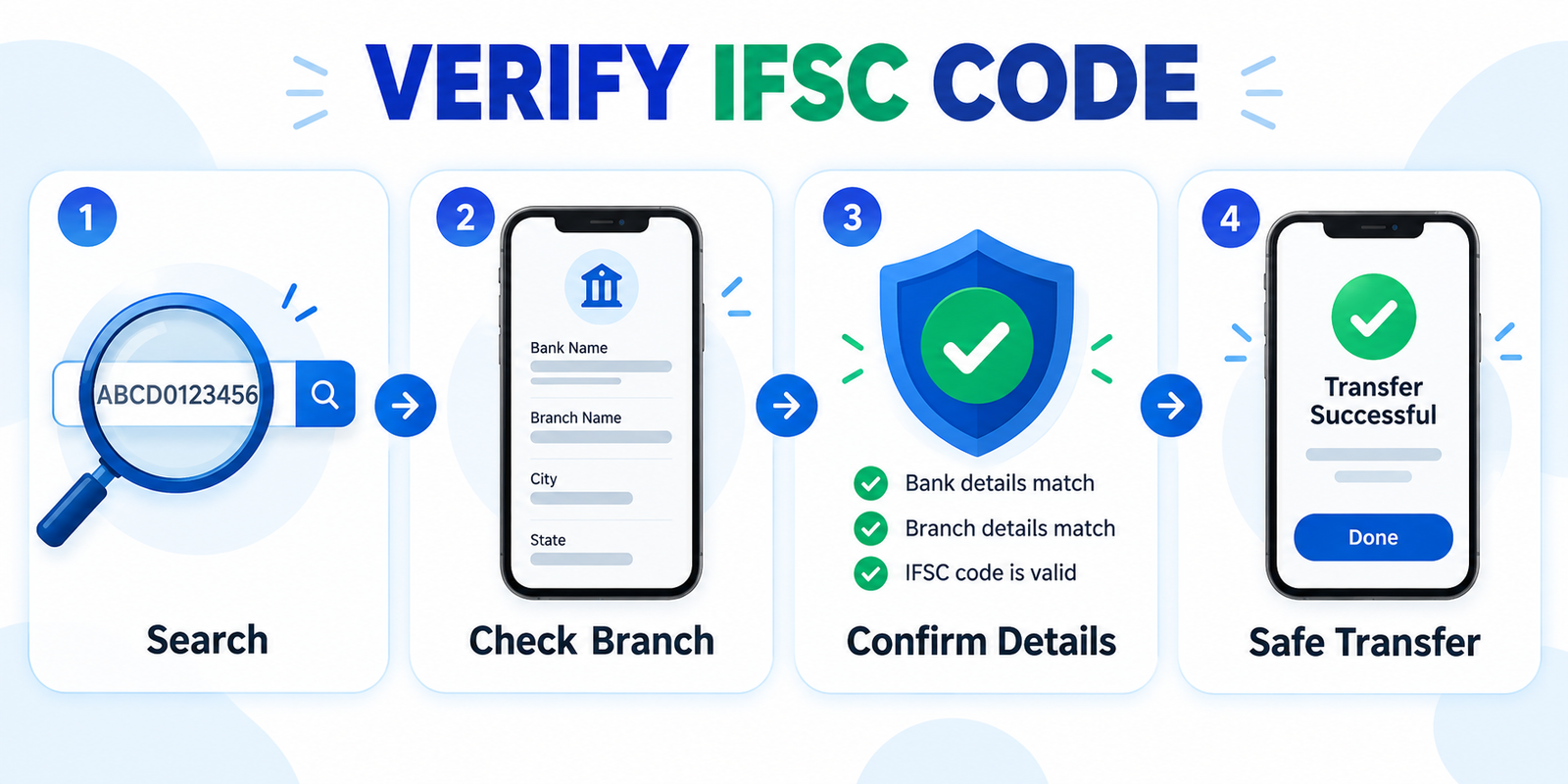
How to Verify IFSC Code Before Transfer: A Step-by-Step Safety Guide
A simple habit of checking your IFSC code before a bank transfer can help you avoid failed payments, wrong branch routing and unnecessary delays In this guide, you will learn how to verify IFSC code practically, how to check IFSC code validity with trusted sources and simple steps to verify IFSC before NEFT, RTGS or IMPS transfer.
Why IFSC Verification Matters
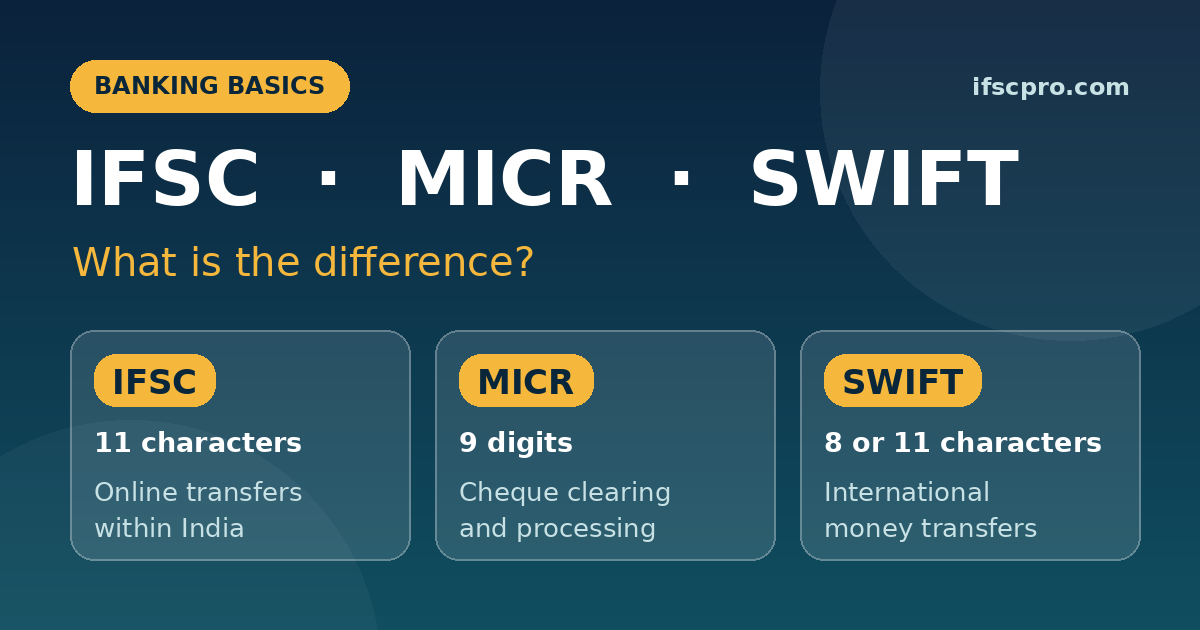
Your bank branch can be identified for electronic transfers by its 11-character Indian Financial System Code (IFSC). You run the risk of having your funds sent to the wrong branch or having the transaction canceled due to a delay if the IFSC is wrong. For this reason, it is prudent to implement the IFSC verification procedure prior to each transfer.
✅ Always confirm through official banking channels or the RBI’s IFSC directory before sending money.
IFSC Code Verification Methods You Can Trust
Use these reliable methods to check IFSC code validity and reduce transfer errors.
1) Bank’s Mobile App or Net Banking (Fastest)
- Log in to your bank’s app or internet banking portal.
- Open Account Details / Account Summary for the beneficiary or your own account.
- Confirm the 11‑character IFSC shown matches the one you entered in the transfer form.
This is ideal for “verify IFSC before bank transfer” checks because it reflects the bank’s live records.
2) RBI’s Official IFSC/MICR Search
- Visit the Reserve Bank of India’s IFSC search page.
- Select Bank → State → District → Branch.
- Note the exact IFSC and compare it character-by-character with your entry.
This method is authoritative and useful when you only have the branch name.
3) Cheque Leaf or Passbook Cross‑Check
- On a standard Indian cheque, the IFSC is printed near the top by the branch address (sometimes also near the MICR band).
- In your passbook, the first page often lists the IFSC with your account number and branch.
- Match the printed IFSC with the one in your transfer app.
? Your IFSC code is as important as your account number—treat it like sensitive data.
4) Dedicated IFSC Code Checker Online
- Use a reputable IFSC lookup site that sources data from official datasets.
- Search by bank + branch + city and validate the 11‑character format (4 letters + “0” + 6 characters).
- On Use our IFSC code checker online
- ifscpro.com IFSC Number Verification Process (Summary) Quickly verify codes
Before you hit “Confirm”, here’s a quick checklist to make sure the IFSC code is right before you complete your NEFT/RTGS/IMPS transaction:
- ✅ Length & format: Exactly 11 characters; first 4 letters (bank), 5th is “0”, last 6 identify the branch.
- ✅ Spelling match: Branch name in the IFSC result matches the beneficiary’s branch (e.g., “Koramangala” vs “Koramangala Layout”).
- ✅ City/district alignment: The city and district in the IFSC record align with the beneficiary’s address.
- ✅ No look‑alike errors: Watch for O/0, I/1, l/1 confusions; copy‑paste when possible.
- ✅ Recent branch changes: If the branch merged or relocated, re‑verify on the bank site or RBI portal.
How to check IFSC code (Practical tips)
Choose from the App + RBI directory, or cheque + bank website.
Two sources are confirmation of mistakes.
- Use the beneficiary’s bank: If you’re sending to another bank, ask the beneficiary to share a screenshot of their account details showing IFSC.
- Tebefore sending a little: Before sending to new beneficiaries, transfer a small amount first, and then send the full amount once credited.
- Save verified IFSCs: Store verified IFSC codes in your contacts or notes for repeat transfers to the same branch.
Troubleshooting: IFSC Verification Red Flags
If any of these appear, pause and re‑verify IFSC code validity:
- The IFSC returns “branch not found” on the RBI directory.
- The bank’s website shows a different IFSC for the same branch name.
- The 5th character is not “0,” or the length isn’t 11 characters.
- The branch city/district doesn’t match the beneficiary’s location.
In such cases, contact the beneficiary or your bank’s support before proceeding.
Last Step: Turn Verification into a Habit Always worth a check before you send especially if it’s the first time you’re paying the payee or for large payments. Bookmark this guide, use an IFSC code checker online and keep the RBI directory handy. Make your safe transfers easier with our IFSC finder tool. NEFT vs RTGS vs IMPS
and
more on ifscpro.com
FAQ:
Q1: How do I verify my IFSC code before initiating a bank transfer?
Log in to your bank’s app or net banking and open Account Details/Summary. Compare the 11‑character IFSC shown there with the one you entered. For extra confidence, cross‑check on the RBI’s IFSC directory or your cheque leaf/passbook.
Q2: What is the fastest IFSC code verification method?
Your bank’s mobile app or internet banking is usually fastest and most reliable for “verify IFSC before bank transfer” checks because it reflects live branch records.
Q3: How can I check IFSC code validity without a cheque?
You can check the official IFSC/MICR search at the RBI website (Bank → State → District → Branch) or a reliable online IFSC code checker that pulls the information. official data sets data .
Q4: What IFSC format should I validate?
IFSC is always 11 characters: first four letters for the bank, fifth character is “0”, and last six identify the branch (e.g., SBIN0001234). If the pattern doesn’t match, re‑verify.
Q5: What if the IFSC shows “branch not found”?
Pause the transfer. Re‑check spelling, city/district, and bank name. Confirm on the bank’s branch locator and the RBI directory, then ask the beneficiary to share a screenshot of their account details.
Q6: Should I start with a tiny amount and see what happens?
Yes. Prior to transferring the full amount to new beneficiaries, it is recommended to send a small test transfer to confirm credit. It is a practical safety measure that complements IFSC verification.