IFSC Code In UPI Payments: Role, Use And Safety

What Is the Role of IFSC in UPI Payments?
IFSC and UPI both support digital payments in India, but they are used differently. For most everyday UPI payments, you do not need to enter an IFSC code. You can pay using a UPI ID, mobile number, or QR code. However, IFSC can be important when a UPI app allows you to send money using a beneficiary’s account number and bank branch details.
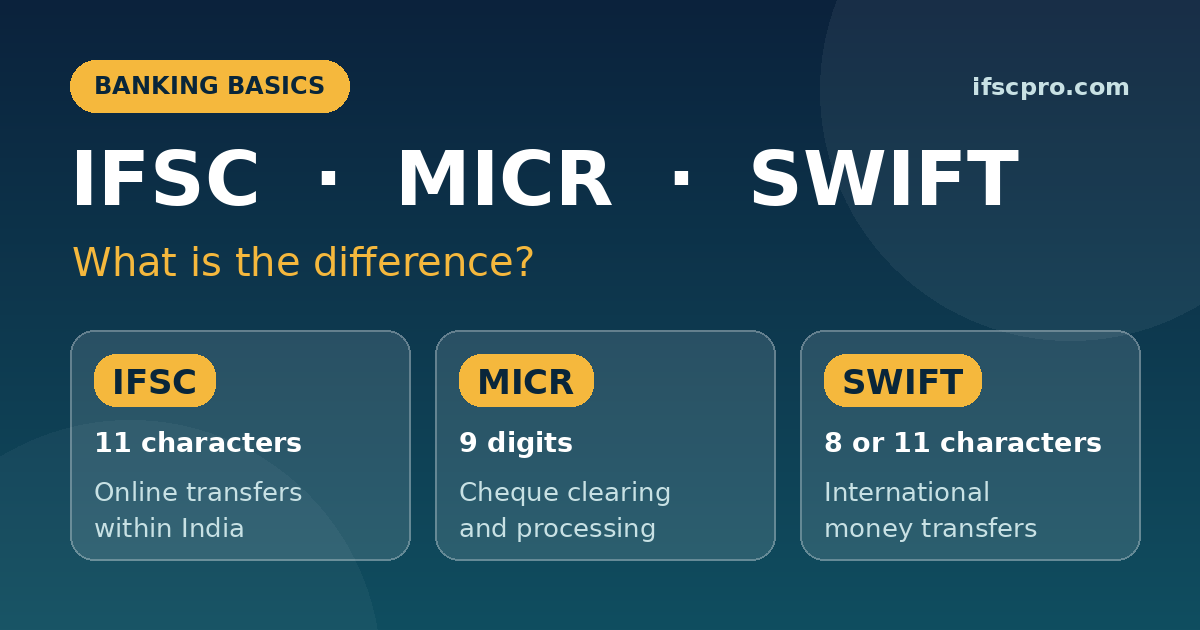
An IFSC code is an 11-character code that identifies a bank branch. UPI is a payment system that links your bank account to a UPI app. Understanding the role of IFSC in UPI payments helps you choose the correct payment details and avoid confusion between UPI, NEFT, RTGS, and IMPS.
Does UPI Need an IFSC Code?
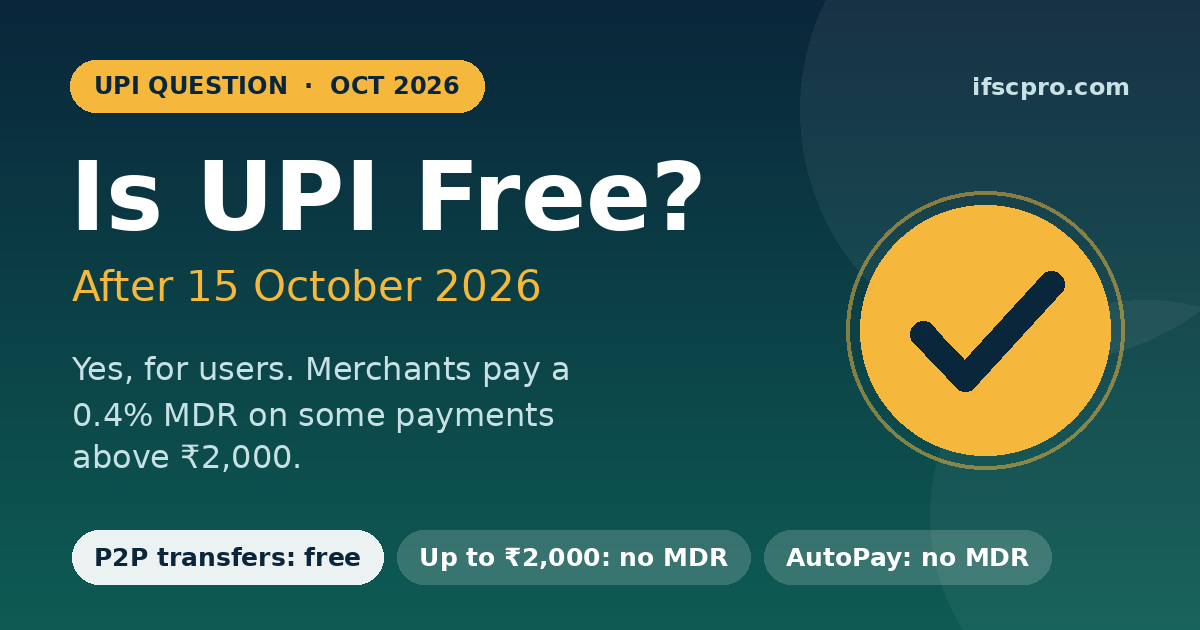
Usually, no. When you send money using a UPI ID, mobile number, or QR code, you normally do not enter the recipient’s account number or IFSC code. The UPI system uses the linked bank-account information behind the payment.
For example, if you pay name@bank through a UPI app, you enter the UPI ID and amount. The app does not ask you to type an IFSC code.
? A UPI ID is designed to make payments easier by avoiding the need to share full bank-account details.
When Is IFSC Code Used for UPI Transfers?
Some UPI apps and bank apps offer an option to send money using a beneficiary’s bank-account number and IFSC code. This can be useful when:
-
The receiver has not shared a UPI ID.
-
The receiver is not registered on UPI.
-
You have the account number and IFSC code.
-
You want to add the beneficiary using bank-account details.
-
A business or service provider shares account details instead of a QR code.
In these cases, the IFSC code helps identify the receiving bank branch. You should enter the correct account number and IFSC code, then review the recipient details shown by the app before you approve the payment.
✅ IFSC helps route an account-number-based transfer to the correct bank branch.
How IFSC Supports Bank Routing
The IFSC code identifies the beneficiary’s bank branch. It has 11 characters:
-
The first four characters identify the bank.
-
The fifth character is always
0(zero). -
The last six characters identify the branch.
For example, SBIN0001234 identifies a particular branch of State Bank of India. If you use account number and IFSC details in a supported payment flow, the code helps the system identify the branch connected to that account.
IFSC is especially important for NEFT, RTGS, and IMPS transfers, where it is commonly required with the beneficiary account number. In UPI, it is mainly relevant when you choose the account-number-and-IFSC method rather than using a UPI ID or QR code.
UPI ID vs Account Number and IFSC
The main difference is the information you enter.
UPI ID Payment
A UPI ID is a virtual payment address, such as name@bank. It is linked to the recipient’s bank account through the UPI system.
You usually need:
-
UPI ID, mobile number, or QR code
-
Payment amount
-
UPI PIN to approve the payment
You normally do not need the recipient’s IFSC code.
Account Number and IFSC Payment
This method uses traditional bank-account details. You may need:
-
Beneficiary name
-
Account number
-
IFSC code
-
Bank or branch information, depending on the app
? Use the account-number-and-IFSC option only when you have verified the beneficiary’s correct details.
Practical Example
Suppose you need to pay a service provider. They send you two payment options:
-
A QR code and UPI ID
-
An account number and IFSC code
If you scan the QR code or use the UPI ID, you usually do not need the IFSC code. If you choose the account-number method, you need the correct IFSC code to identify the bank branch.
Before paying, verify the recipient name shown by the UPI app. If the name, account details, or branch information appears different, stop and reconfirm through a trusted contact method.
Common Confusion: IFSC Is Not a UPI PIN
An IFSC code is not a password, PIN, or security code. It identifies a bank branch. Your UPI PIN is a private code used to authorise a payment.
? Never share your UPI PIN, OTP, debit-card PIN, CVV, or internet-banking password with anyone.
You may share your UPI ID to receive money. You may also share your account number and IFSC code when required for receiving a bank transfer. However, no one needs your UPI PIN to send you money.
Does IFSC Matter When Adding a Bank Account to UPI?
In many UPI apps, you select your bank from a list, verify your mobile number, and choose the account linked to that mobile number. You do not usually type your own IFSC code during this process.
The bank and UPI app use the linked account information to set up the account. You may still see your bank name, account number, and sometimes branch details in the app.
If you need to find your own IFSC code, check your bank’s mobile app, passbook, cheque leaf, account statement, or an IFSC lookup tool.
Safety Tips for IFSC and UPI Payments
Follow these simple safety practices:
-
Check the beneficiary name before approving payment.
-
Verify the account number and IFSC when using bank-account details.
-
Do not rely only on a forwarded screenshot.
-
Use the official bank app or a trusted UPI app.
-
Never share a UPI PIN to receive money.
-
Confirm a high-value payment request through a known contact method.
Final Reminder
IFSC does not need to be entered for most UPI-ID or QR-code payments. Its role in UPI is mainly to identify the receiving bank branch when you use an account number and IFSC-based transfer option. For NEFT, RTGS, and IMPS, IFSC remains an important bank-routing detail.
Use the IFSCPro IFSC finder to check bank branch details when you need to enter an account number and IFSC code. This guide provides general banking information and does not replace confirmation from your bank.
Frequently Asked Questions: IFSC and UPI
Is an IFSC code required for UPI payments?
Usually, no. You normally use a UPI ID, mobile number, or QR code. IFSC may be needed when a supported app allows payment using account number and IFSC details.
Can I send money by account number and IFSC through UPI?
Some UPI or bank apps may provide this option. Enter the account number and IFSC carefully, then verify the recipient name before approving the payment.
Is IFSC code used for UPI ID payments?
No. When you pay using a UPI ID such as name@bank, you generally do not enter an IFSC code.
Does UPI use IFSC in the background?
Your linked bank account has branch information, but users do not normally need to enter an IFSC code for a standard UPI-ID or QR payment.
Can I receive UPI money using only my IFSC code?
No. A sender normally needs your UPI ID, mobile number, QR code, or account number with IFSC depending on the payment method.
Is IFSC important for NEFT, RTGS, and IMPS?
Yes. IFSC is commonly used with the beneficiary account number to identify the receiving branch for these bank-transfer methods.
What should I do if an IFSC code does not match the branch?
Do not proceed with the account-number-based payment. Confirm the correct bank and branch details through a trusted contact method.