Can Money Reach The Wrong Branch If I Enter The Wrong IFSC Code?

Can Money Reach the Wrong Branch If I Enter the Wrong IFSC Code?
Yes, entering the wrong IFSC code can route your transfer towards an unintended bank or branch. However, this does not automatically mean someone else receives your money. The payment may fail, return, or sometimes reach the intended account. The outcome depends on the account number, the IFSC entered and the receiving bank’s checks.
If you have already transferred money, check the transaction status and contact your bank immediately. Do not assume that every transfer made with a wrong IFSC code will automatically reverse.
Why Does the IFSC Code Matter?
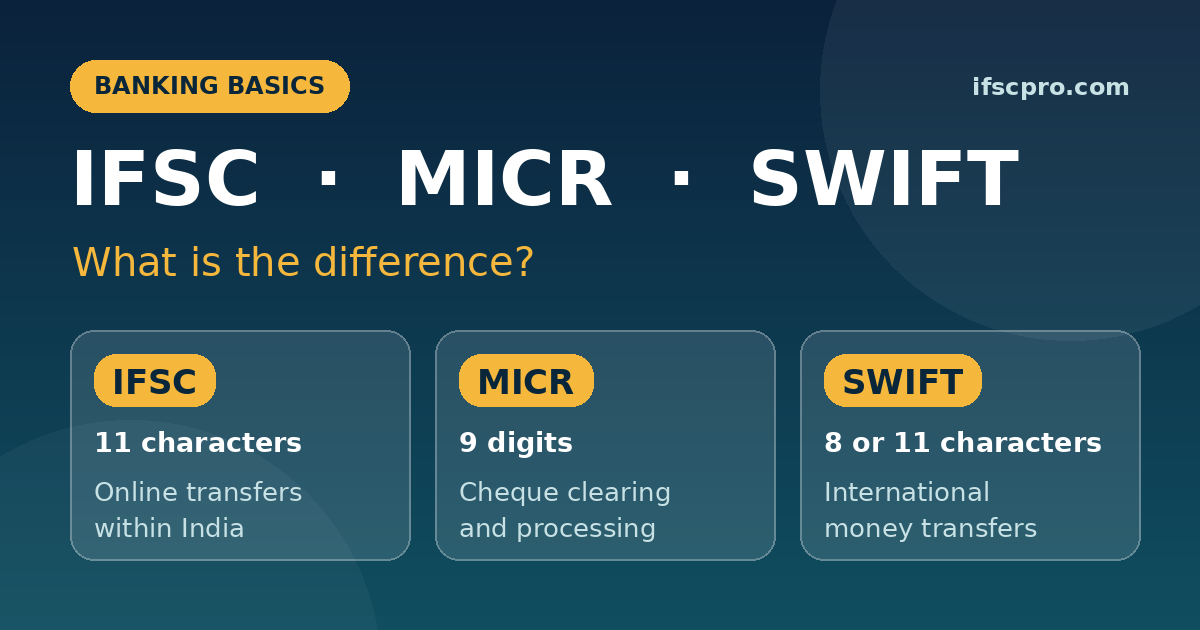
The Indian Financial System Code, or IFSC, identifies a bank branch for electronic payments. It contains 11 characters, including letters and numbers.
Think of the IFSC as part of the payment’s routing instructions. The account number identifies the account to be credited. Both details matter when making an account-based bank transfer.
RBI explains that NEFT uses IFSC codes to route payment messages to the relevant banks and branches. Source: RBI NEFT FAQs.
What Happens If You Enter the Wrong IFSC Code?
An incorrect IFSC code does not produce the same result in every transaction. Here are the main possibilities.
1. The IFSC Code Is Invalid
Your banking app may reject a code that does not exist or is not supported. You might see an error while adding the beneficiary or submitting the payment.
If your account has already been debited, check whether the transaction is marked as pending, failed or returned. An error message alone does not confirm that the money has returned to your account.
2. The IFSC Belongs to Another Branch of the Same Bank
A transfer may still reach the intended account if the bank’s centralised system can identify that account despite the branch mismatch. However, this is not guaranteed.
Never deliberately use another branch’s IFSC code. Even if an earlier payment succeeded, correct the saved beneficiary details before sending more money.
3. The IFSC Belongs to a Different Bank
The payment may be returned if the receiving bank cannot identify a valid account. However, an unintended credit is possible if the supplied account number matches an account at that bank and the payment passes its checks.
These possible outcomes are described in Moneycontrol’s explanation of incorrect IFSC transfers. Your bank must confirm what happened to your particular payment.
Does a Correct Account Number Guarantee Safety?
No. A correct account number does not make a wrong IFSC code safe.
An account number should not be treated as a universal identifier across all banks. Always verify the complete combination of:
-
Bank name
-
Beneficiary account number
-
IFSC code
Also, distinguish between a beneficiary nickname you entered yourself and an account-holder name retrieved by the bank. A saved label such as “Ravi Rent” does not prove who owns the receiving account.
If your banking screen displays a verified beneficiary name, compare it carefully with the intended recipient before authorising the payment.
Example: Selecting the Wrong Branch
Imagine sending ₹5,000 to a friend whose account is maintained at a Hyderabad branch. You accidentally select another branch of the same bank.
The transfer might still succeed, or the bank might reject it. Ask your friend to check their account statement to confirm receipt.
If you selected a different bank entirely, contact your bank promptly. Do not send a second payment simply because your friend has not received the first one. First, confirm the status of the original transfer.
What Should You Do After Transferring Money?
If you discover that you entered the wrong IFSC code, follow these steps:
-
Check the transaction status: Open your banking app and review the payment in your transaction history.
-
Save the payment details: Keep the transaction reference number, amount, date and beneficiary information.
-
Contact your bank: Explain that you entered an incorrect IFSC code and provide the transaction details.
-
Request payment tracing: Ask whether the payment was rejected, returned or credited.
-
Request recovery assistance: If the money reached an unintended account, ask the bank to begin its recovery process.
-
Keep the complaint number: Use it when following up through the bank’s official support channels.
Never share your OTP, PIN or password with anyone offering to recover the money.
Will the Money Automatically Come Back?
Not always. A rejected payment and a payment credited to an unintended account require different handling.
For NEFT payments that cannot be credited, RBI requires the destination bank to return the transaction within two hours of completion of the relevant batch settlement.
This is not a guaranteed refund deadline for money already credited to another person’s account. Source: RBI NEFT FAQs.
How Can You Prevent an IFSC Mistake?
-
Get current details: Ask the recipient for their latest bank account details.
-
Verify the IFSC: Check it through the bank’s official website or app.
-
Review the branch: Confirm the displayed bank and branch before saving a beneficiary.
-
Update saved details: Recheck them after a branch transfer or bank merger.
-
Check the beneficiary name: Compare the account-holder name displayed by the bank with the intended recipient.
-
Consider a test payment: For a new recipient, send a small amount and confirm receipt before transferring more.
Check both the IFSC code and account number every time you add or change a beneficiary.