Difference Between IFSC Code And SWIFT Code: Complete Beginner's Guid
What Is the Difference Between IFSC and SWIFT Codes?
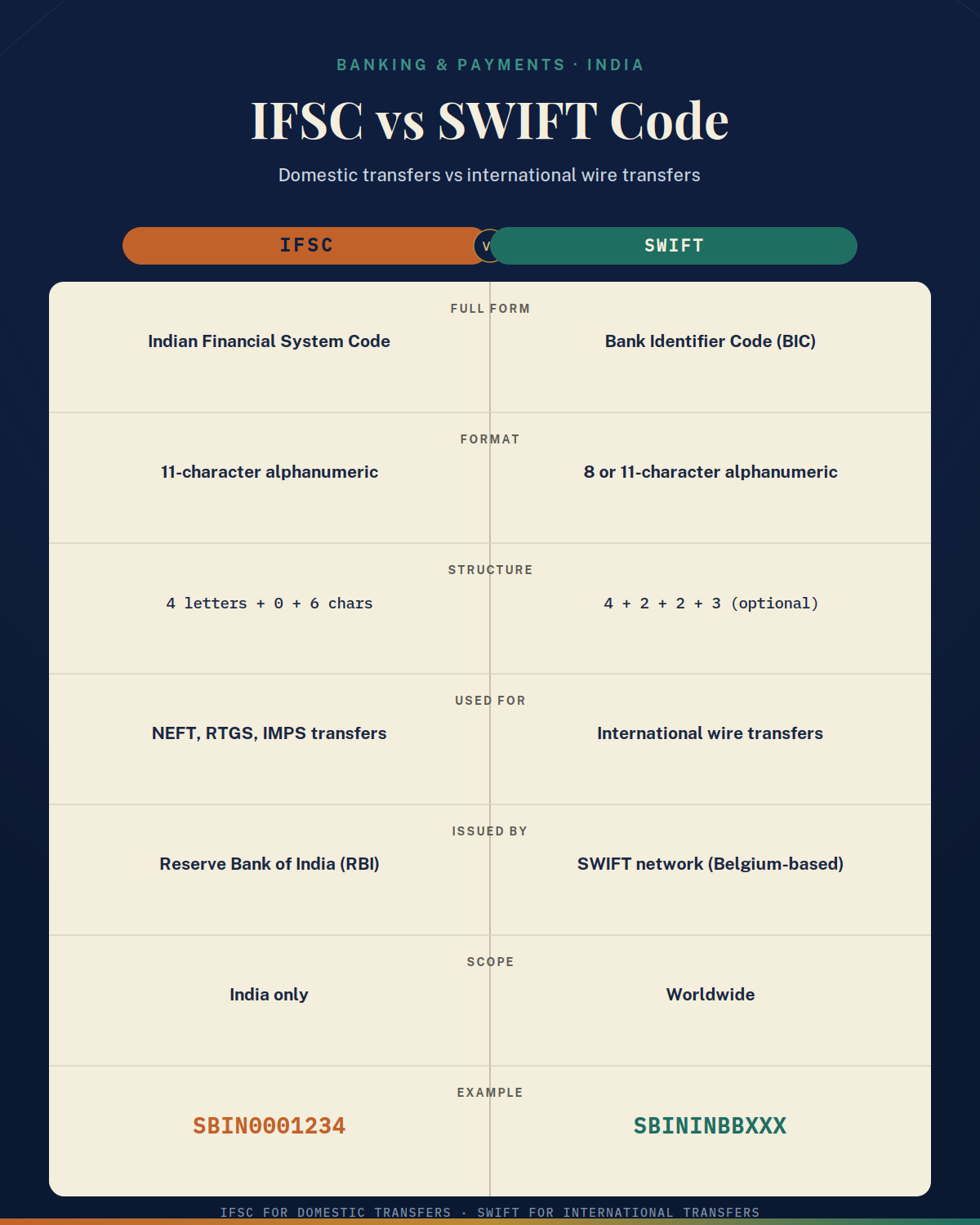
The main difference between IFSC and SWIFT codes is where they are used.
Key Differences
-
IFSC code is used for domestic bank transfers within India.
-
SWIFT code is used for international money transfers between banks in different countries.
-
Both codes identify banks, but they operate in different banking systems.
-
IFSC is required for NEFT, RTGS, IMPS, and other domestic transfers.
-
SWIFT is required for international wire transfers and cross-border payments.
What Is an IFSC Code?
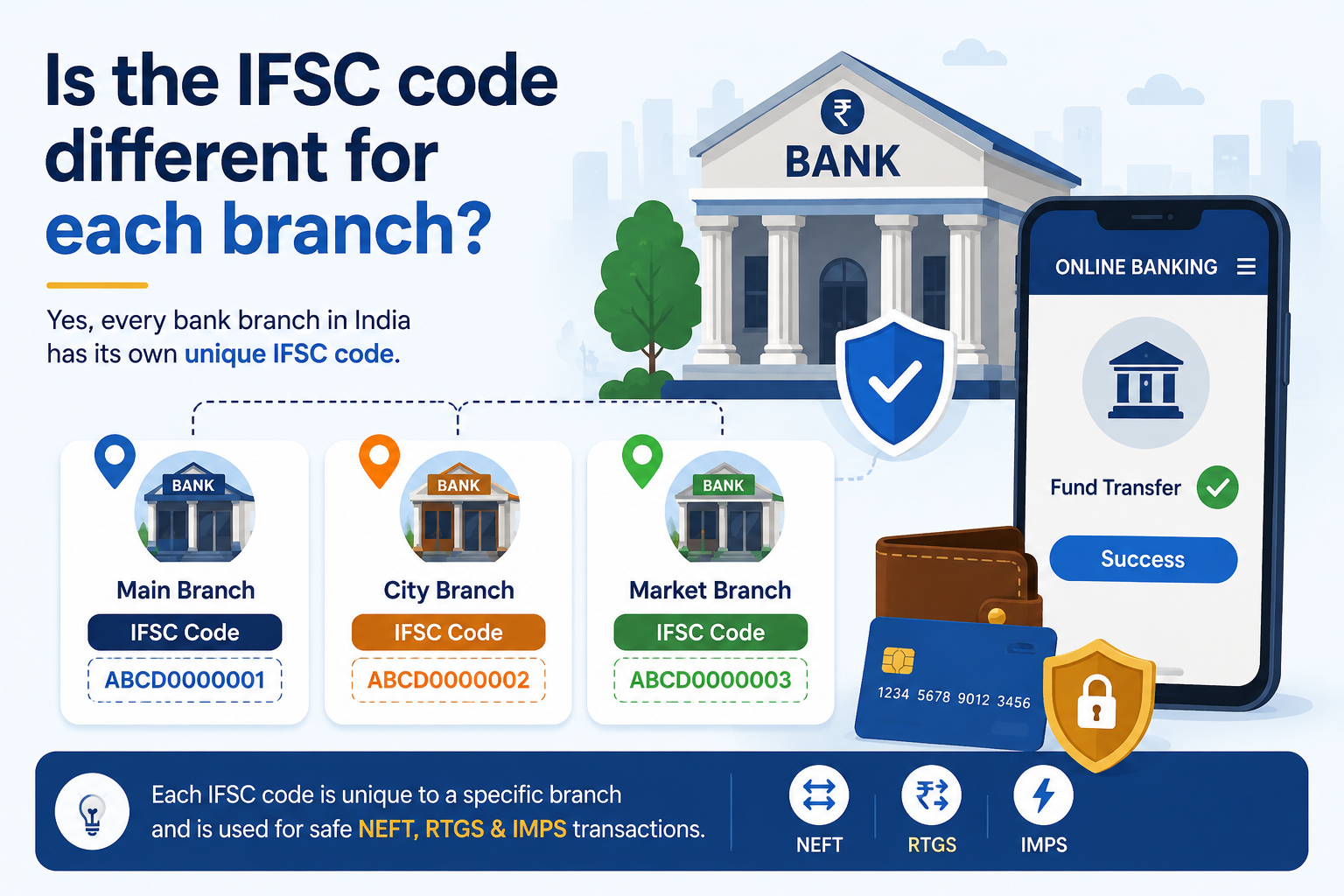
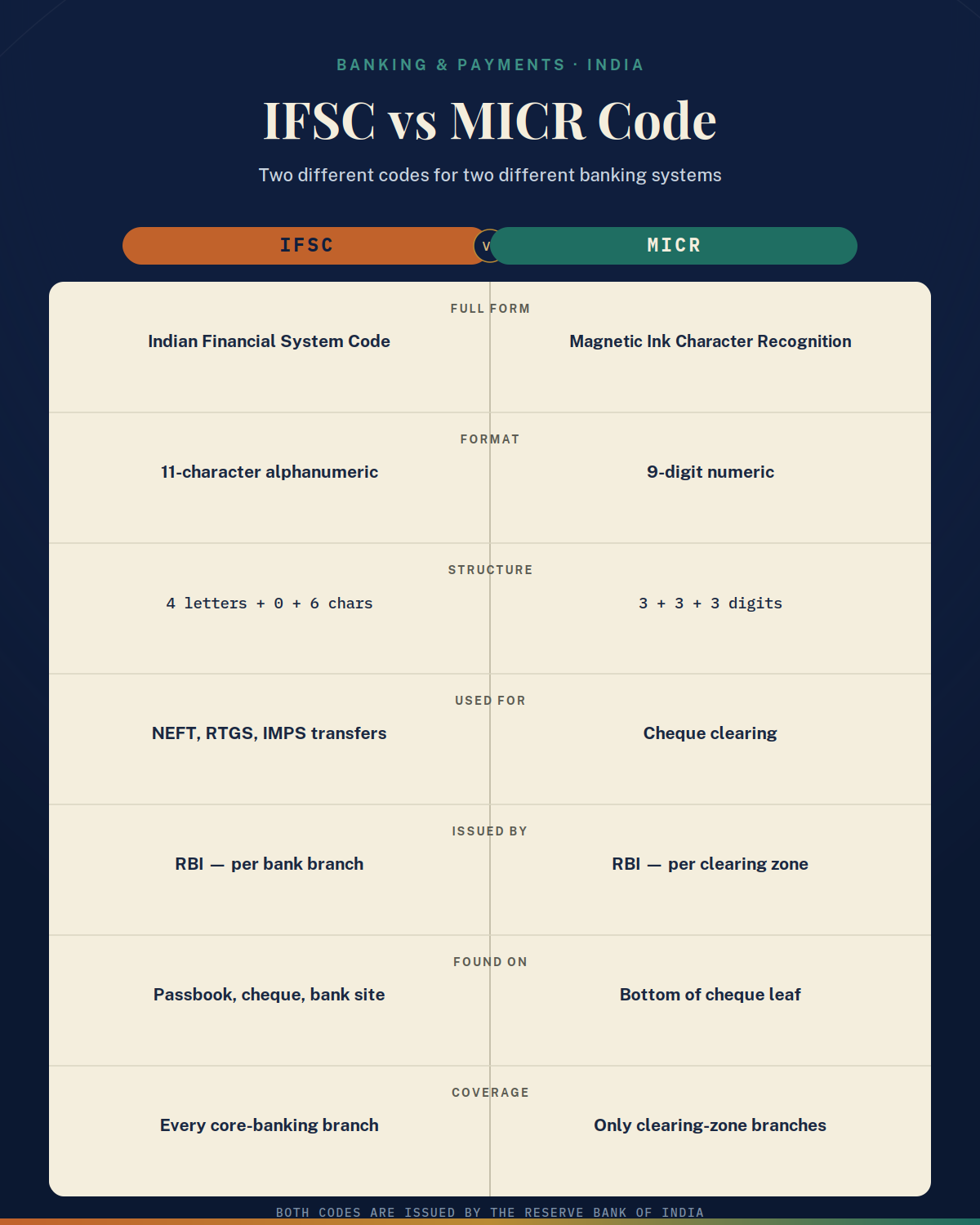
An IFSC (Indian Financial System Code) is an 11-character alphanumeric code that uniquely identifies a bank branch in India.
Key Points
-
Stands for Indian Financial System Code.
-
Contains 11 alphanumeric characters.
-
First 4 letters represent the bank.
-
5th character is always "0".
-
Last 6 characters identify the bank branch.
-
Used for NEFT, RTGS, and IMPS transactions.
-
Required for online fund transfers within India.
-
Issued under the Reserve Bank of India (RBI) framework.
What Is a SWIFT Code?
A SWIFT Code (also known as a BIC – Bank Identifier Code) identifies a bank for international financial transactions.
Key Points
-
Stands for Society for Worldwide Interbank Financial Telecommunication.
-
Also known as Bank Identifier Code (BIC).
-
Used for international money transfers.
-
Contains 8 or 11 alphanumeric characters.
-
First 4 characters identify the bank.
-
Next 2 characters represent the country.
-
Following 2 characters identify the city or location.
-
Last 3 characters (optional) identify the branch.
-
Accepted by banks in 200+ countries.
When Do You Need an IFSC Code?
Use an IFSC code when you are making a bank transfer within India.
Common Uses
-
Sending money through NEFT
-
Making RTGS payments
-
Using IMPS transfers
-
Adding a beneficiary in internet banking
-
Online bank-to-bank transfers
-
Paying merchants or businesses in India
-
Receiving salary or domestic bank payments
When Do You Need a SWIFT Code?
Use a SWIFT code when sending or receiving money internationally.
Common Uses
-
Receiving money from abroad
-
Sending money overseas
-
International wire transfers
-
Foreign education payments
-
International business payments
-
Import and export transactions
-
Overseas remittances
Example of an IFSC Code Transfer
Scenario
Krishna wants to transfer ₹19,000 from his ICICI Bank account in Vijayawada to his friend's Axis Bank account in Bengaluru.
Required Details
-
Recipient's account number
-
Account holder's name
-
Transfer amount
No SWIFT code is required because the transfer is within India.
Example of a SWIFT Code Transfer
Scenario
Prasad studies in London, and his parents send money from India to his bank account in the UK.
Required Details
-
Bank account number
-
Account holder's name
-
Bank name
-
SWIFT code
-
(IBAN may also be required depending on the country)
An IFSC code alone cannot be used for international money transfers.
How to Find Your IFSC Code
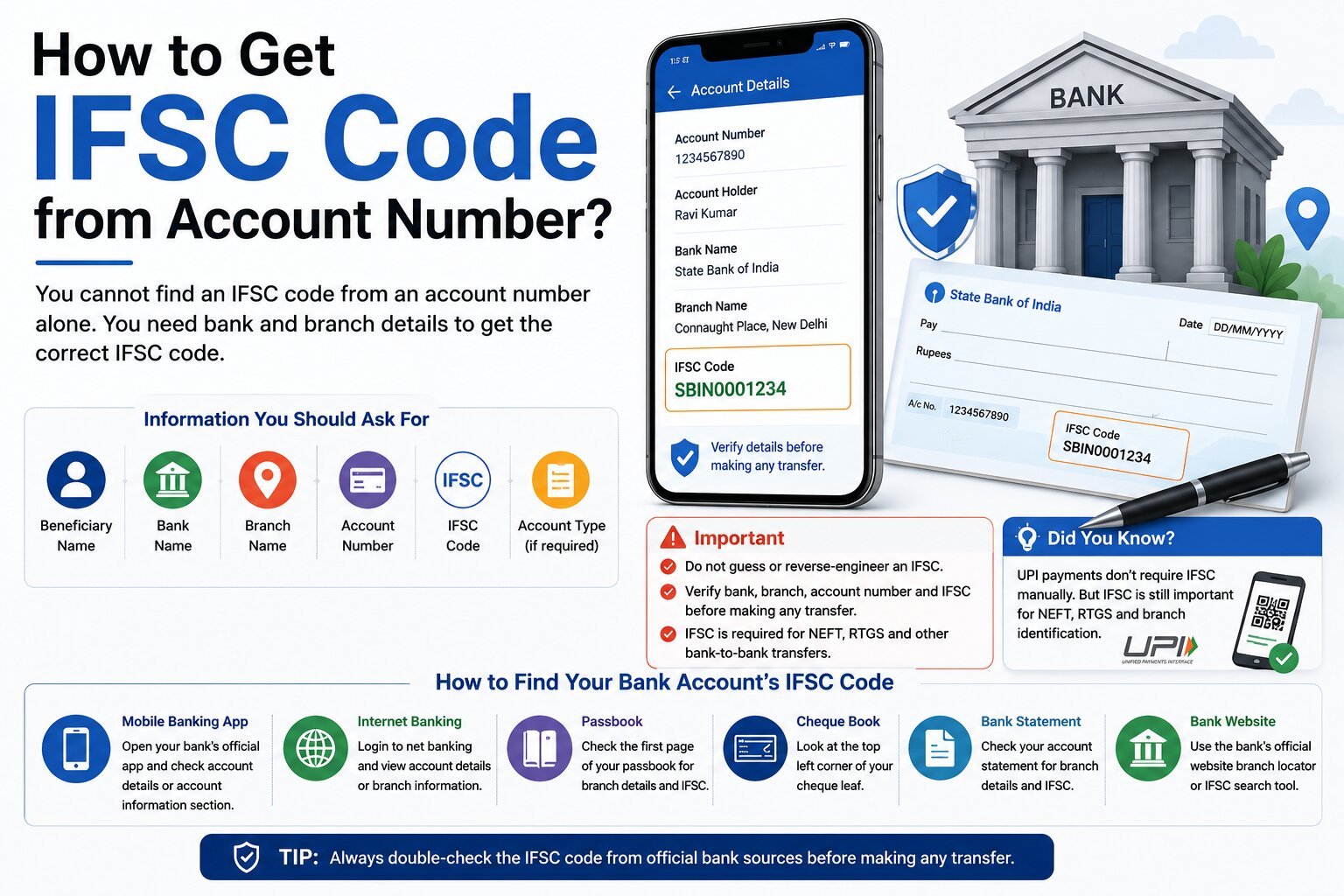
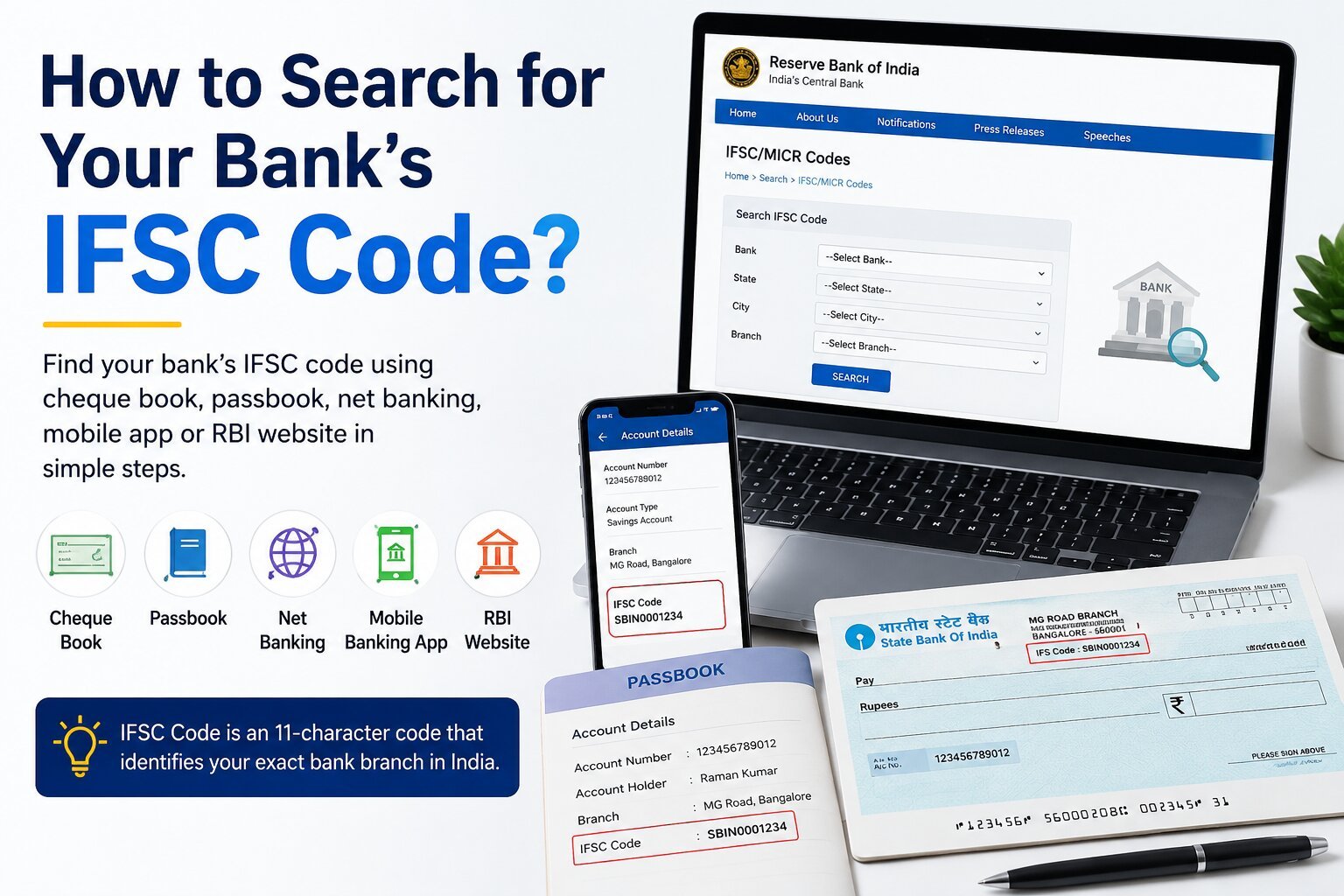
You can find your IFSC code in several places.
IFSC Code Locations
-
Bank passbook
-
Cheque book
-
Bank statement
-
Internet banking portal
-
Mobile banking app
-
Bank's official website
-
RBI-approved IFSC lookup websites
How to Find Your SWIFT Code
A bank's SWIFT code is available through official banking channels.
SWIFT Code Locations
-
Bank's official website
-
International banking section
-
Bank account statement
-
Internet banking portal
-
Mobile banking app
-
Customer care
-
Bank branch
IFSC Code vs SWIFT Code Comparison
| Feature | IFSC Code | SWIFT Code (BIC) |
|---|---|---|
| Full Form | Indian Financial System Code | Society for Worldwide Interbank Financial Telecommunication |
| Purpose | Domestic electronic fund transfers within India | International and cross-border wire transfers |
| Used For | NEFT, RTGS, IMPS, UPI | International remittances, overseas payments, trade transactions |
| Coverage | India only | Worldwide (200+ countries) |
| Length | 11 characters | 8 or 11 characters |
| Structure | 4-letter bank code + 0 + 6-character branch code | 4-letter bank code + 2-letter country code + 2-character location code + optional 3-character branch code |
| Example | KKBK0000958 | ICICINBBXXX, AXISINBBXXX |
| Issued / Managed By | Reserve Bank of India (RBI) | SWIFT Network |
| Currency Support | Indian Rupee (INR) | Multiple global currencies, including INR |
| Who Uses It | Individuals, businesses, and banks in India | Banks, financial institutions, businesses, and individuals worldwide |
| Where to Find | Passbook, cheque book, bank statement, bank website | Bank website, account statement, international banking portal, bank branch |
| Transaction Charges | Usually low or nominal | May include international banking and intermediary bank charges |
.png)