How To Get IFSC Code From Account Number?
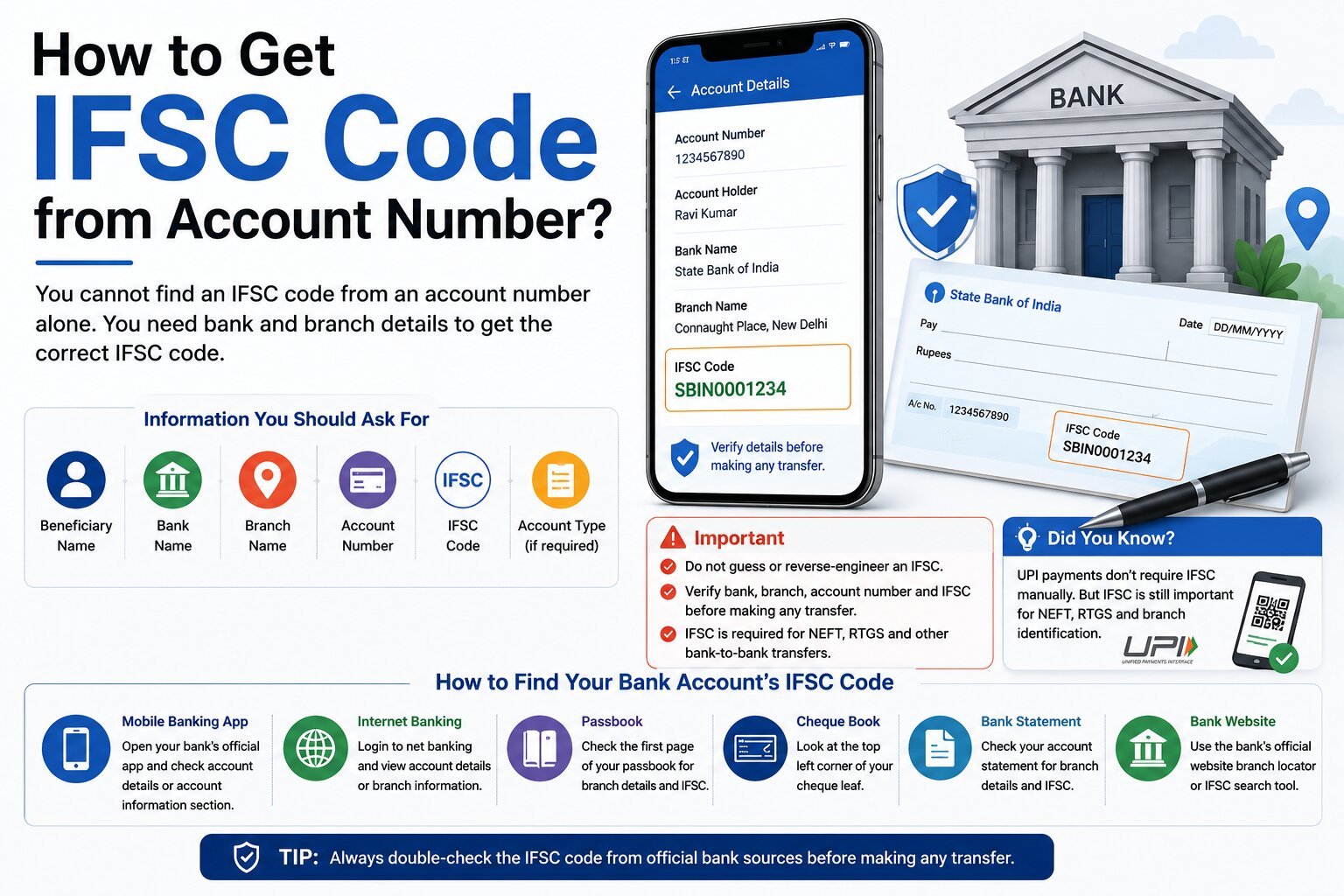
You generally cannot reliably determine the correct IFSC code from an account number alone. An account number identifies a customer's bank account, while an IFSC code identifies the relevant bank branch used for electronic fund transfers. To find the correct IFSC, you should also know the bank and branch details or obtain the IFSC directly from the account holder or bank.
Why Do You Need More Than an Account Number?
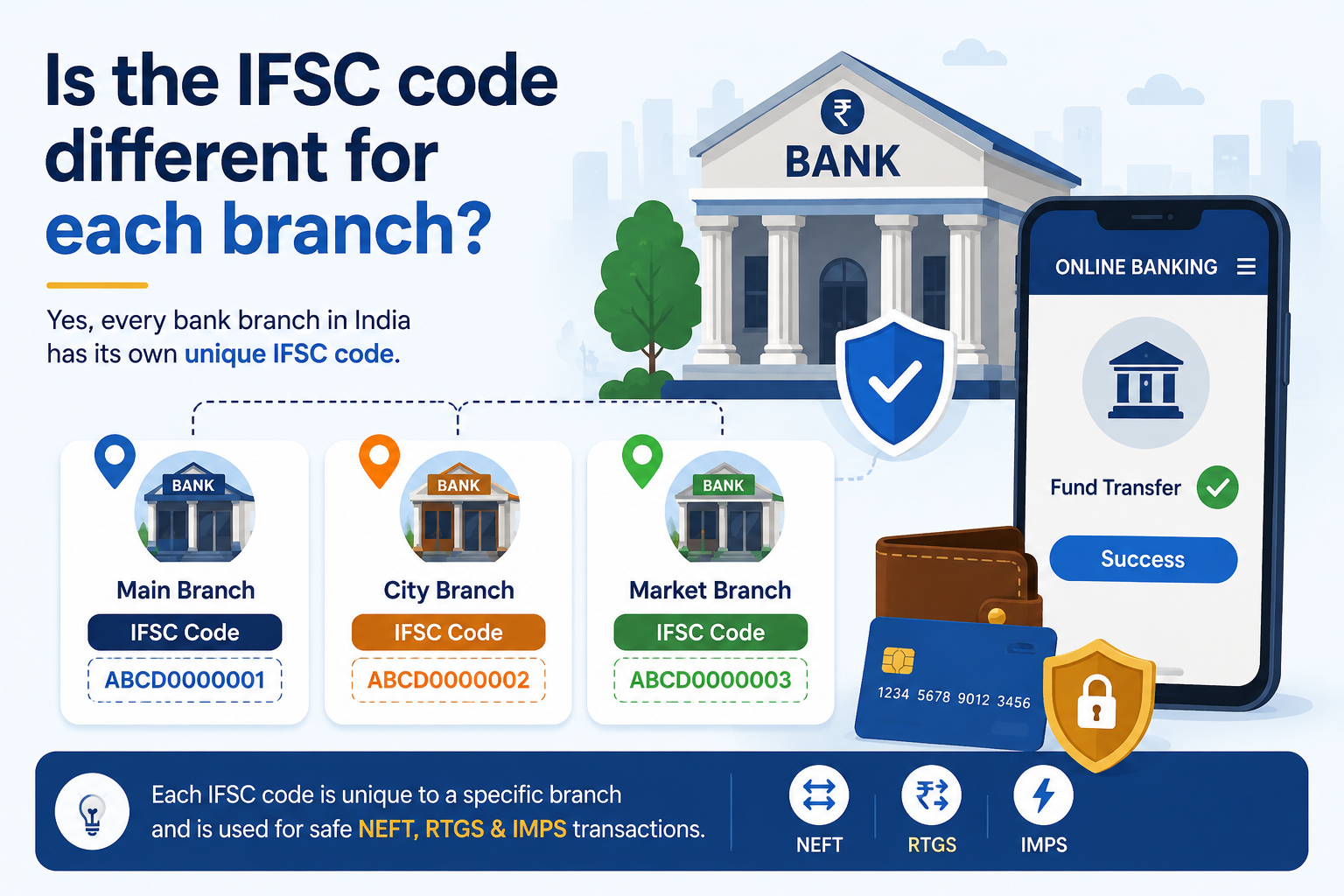
An account number and an IFSC code serve different purposes. The account number identifies a particular customer's account within a bank's system. The IFSC identifies the bank branch associated with an electronic transfer.
For example, suppose someone gives you the following information:
- Account number: 1234567890
- Bank name: Not provided
- Branch: Not provided
- IFSC: Not provided
The account number alone does not provide enough information for you to reliably determine which bank branch's IFSC should be used.
Account-number formats are decided by individual banks. They are not a universal coding system that customers can use to decode an IFSC code.
For a bank transfer, you should obtain the necessary beneficiary details before entering the payment information.
What Information Should You Ask For?
If someone asks you to transfer money to their bank account, request the relevant details from the account holder.
- Beneficiary name
- Bank name
- Branch name
- Account number
- IFSC code
- Account type, if required by the bank
Do not try to reverse-engineer an IFSC code from an account number. If you are unsure about the information, ask the account holder to provide the current details from their bank statement, cheque, passbook, or mobile banking application.
Example 1: Salary Payment
Suppose an employer has an employee's account number on record, but the employee has recently moved their account to another branch.
The employer should not assume that the old IFSC code is still correct. Instead, the employee should provide their current bank details.
The employee could provide:
- Current bank name
- Current branch name
- Current IFSC code
- Account number
- A current bank statement or other suitable account document, if required
This helps the employer avoid using outdated branch information.
Example 2: Family Bank Transfer
Meena wants to send ₹10,000 to her brother. Her brother sends only his account number through a message.
Meena should not try to guess the IFSC from the account number. Instead, she should ask her brother for:
- Bank name
- Branch name
- IFSC code
- Account number
- Beneficiary name
She can then compare the information before making the transfer.
Example 3: Using a Banking App
Some banking applications allow customers to add a beneficiary using bank-account details. Depending on the bank and payment method, the app may ask for the account number and IFSC or may display or validate some beneficiary information after the details are entered.
The exact process differs between banks and banking applications. Always use the official banking app and carefully review the beneficiary details before confirming a transfer.
How to Find the IFSC for Your Own Account
If you are trying to find the IFSC code for your own bank account, you have several options.
- Open your bank's official mobile banking app.
- Select the relevant bank account.
- Open Account Details, Account Information, or a similar option.
- Look for the branch name and IFSC code.
- Compare the information with your bank statement, passbook, or cheque if necessary.
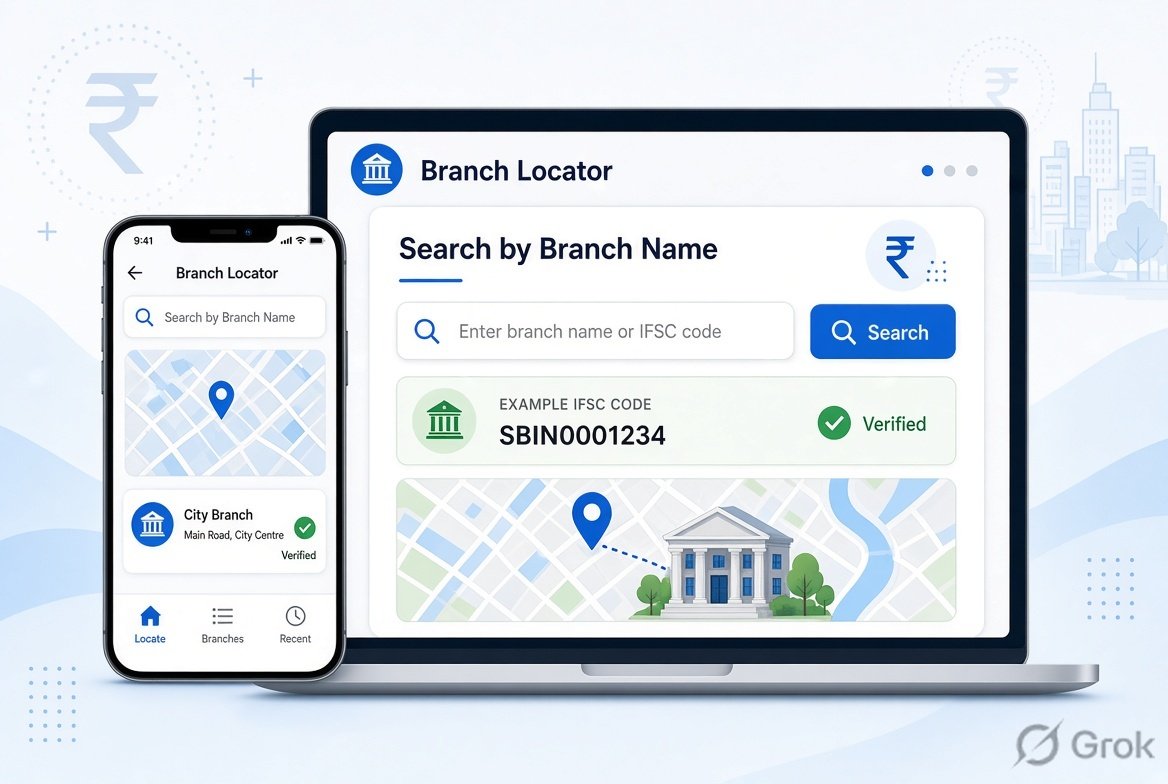
- You can also check your bank's official website for its branch or IFSC search facility.
The exact menu names may differ between banking applications.
How to Find Someone Else's IFSC Code
If you need the IFSC for another person's account, the safest option is to ask the account holder directly.
Ask the account holder for:
- Their bank name
- Branch name
- IFSC code
- Account number
- Beneficiary name
You can then verify the information through the bank's official website or another reliable banking source before making the transfer.
Can You Derive an IFSC Code from an Account Number?
As a general rule, you should not assume that an IFSC can be derived from an account number alone.
The bank determines its own account-number structure. There is no universal formula that customers can use to convert an account number into an IFSC code.
Therefore, be cautious with websites or tools that claim they can always determine the exact IFSC code from an account number alone.
Account Number and IFSC Code Have Different Functions
You can think of a bank transfer like sending a letter.
- IFSC code: Helps identify the relevant bank branch.
- Account number: Identifies the beneficiary's account.
- Beneficiary name: Identifies the person or entity receiving the money.
Depending on the payment method and bank, different pieces of information may be required.
The important point is that an account number is not a substitute for an IFSC code when an IFSC is required for the transaction.
IFSC and Modern Digital Banking
Digital banking has changed how people make payments. Many everyday payments now take place through UPI, where users can pay using a UPI ID, QR code, or other supported UPI identifier without manually entering an IFSC for every transaction.
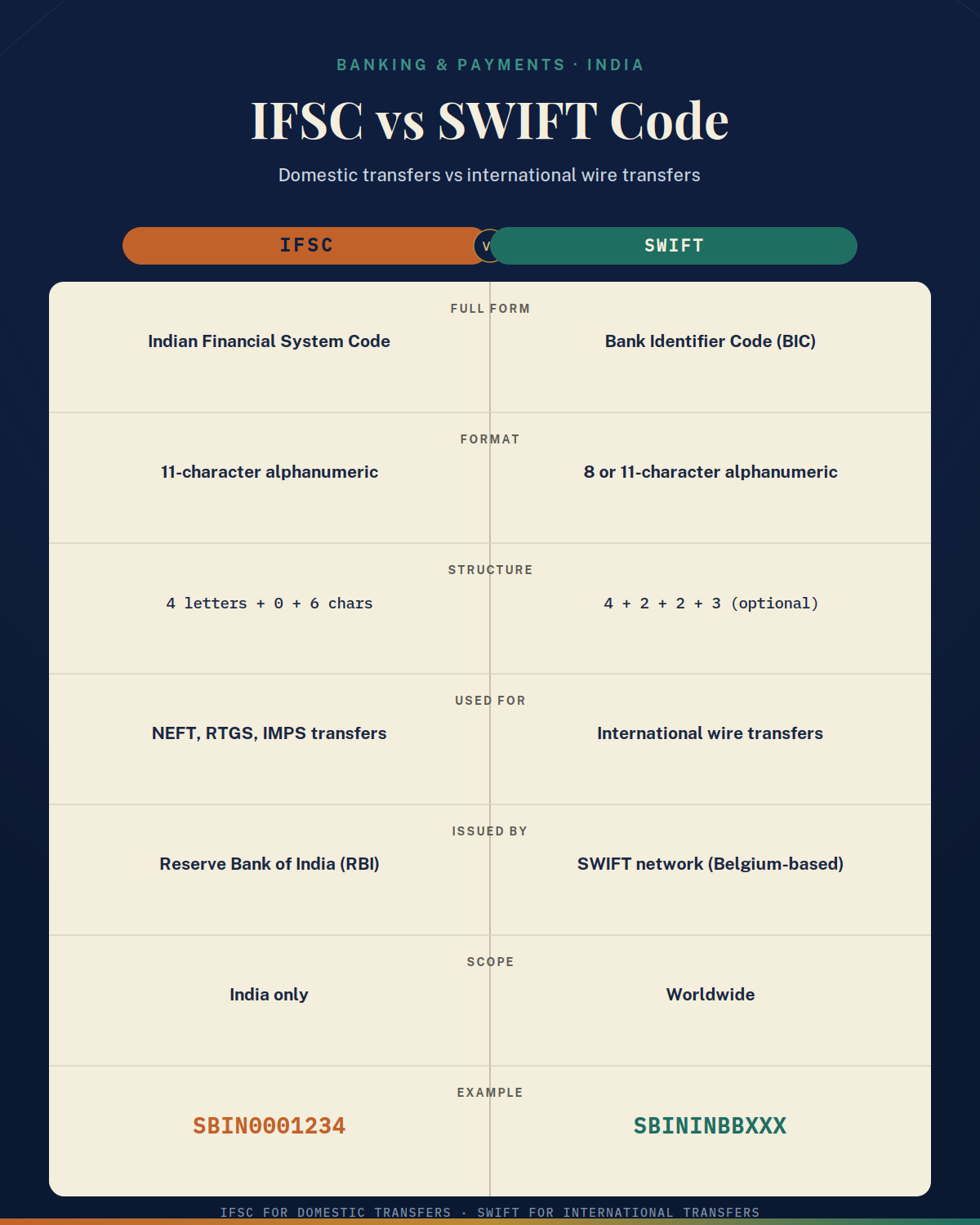
However, IFSC remains relevant for account-based electronic payment systems such as NEFT and RTGS, as well as other banking processes that require identification of the beneficiary's bank branch.
Therefore, knowing how to find and verify an IFSC code is still useful even when you mainly use mobile banking and UPI.
Important Points to Remember
- An account number alone is generally not enough to reliably determine an IFSC code.
- Account numbers and IFSC codes have different purposes.
- Ask the account holder for the correct bank, branch, account number, and IFSC.
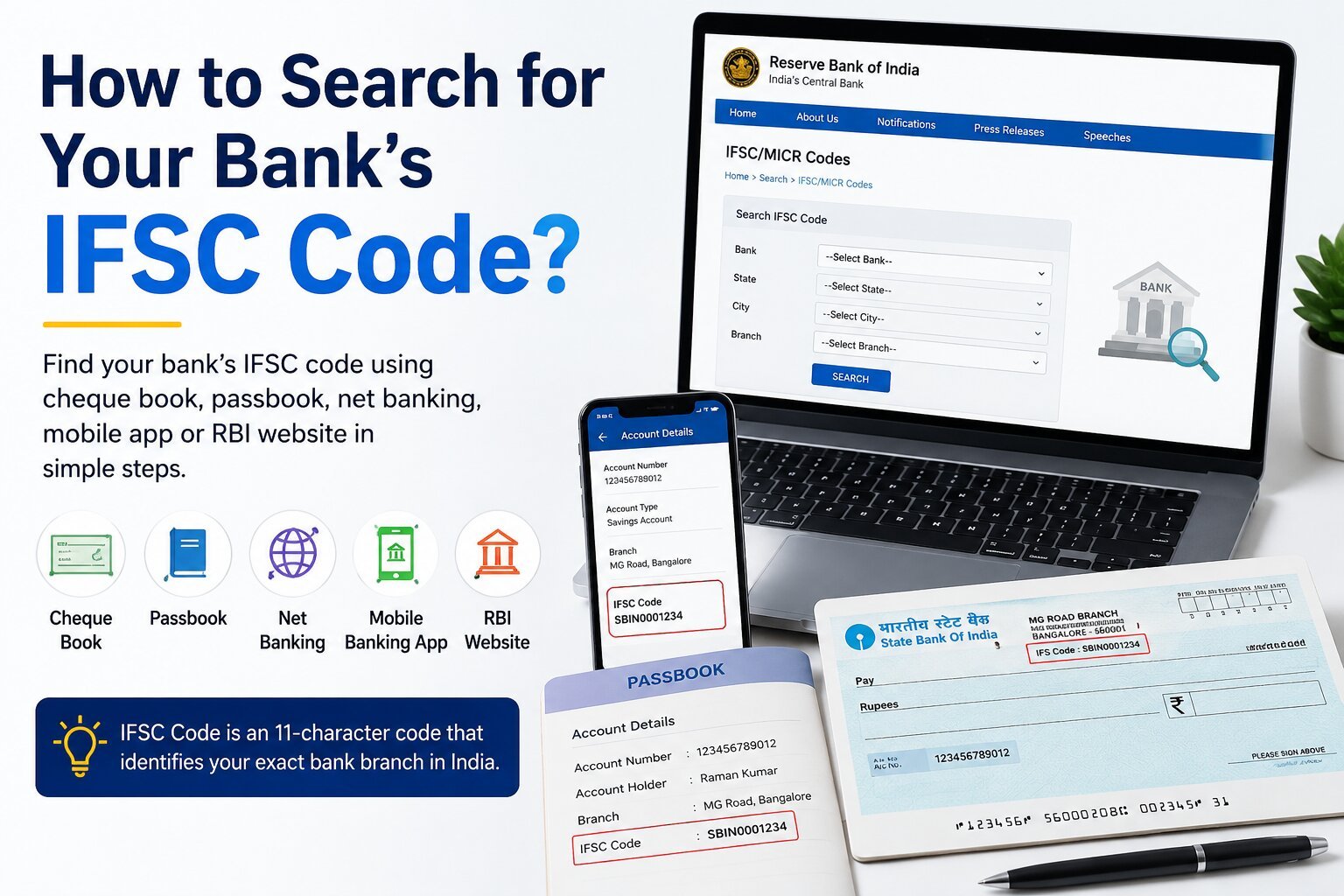
- Check your own IFSC through your bank's official mobile app, internet banking, passbook, cheque, or bank statement.
- Do not try to guess or reverse-engineer an IFSC from an account number.
- Verify the beneficiary information before confirming a bank transfer.
- Use official banking sources whenever possible.
- Never share your OTP, UPI PIN, ATM PIN, password, or card CVV with anyone while trying to verify an IFSC code.
Summary
An account number is not a reliable substitute for an IFSC code. Because the two identifiers serve different purposes, you should obtain the IFSC from the account holder, bank documents, the official banking app, or the bank's official website when an IFSC is required.
Before making an important transfer, always check the beneficiary name, bank name, branch, account number, and IFSC code carefully.
Important: Banking information can change when branches are merged, relocated, closed, or reorganised. Always verify current details through an official bank source before transferring money.

.png)