What Is The Difference Between IFSC And MICR Code?
When Is an IFSC Code Required?
You need an IFSC (Indian Financial System Code) when performing electronic banking transactions. It helps identify the correct bank branch and ensures your money reaches the intended account.
Common Situations Where an IFSC Code Is Required
-
Sending money through NEFT (National Electronic Funds Transfer)
-
Making RTGS payments (Real-Time Gross Settlement)
-
Transferring funds using IMPS (Immediate Payment Service)
-
Adding a beneficiary in internet or mobile banking
-
Making online bank-to-bank transfers
-
Using UPI-linked bank transfers where bank account details are entered
-
Receiving salary or business payments through direct bank transfers
Note: Entering an incorrect IFSC code may cause the transaction to fail, be delayed, or be credited to the wrong bank branch.
When Is a MICR Code Used?
A MICR (Magnetic Ink Character Recognition) code is mainly used for processing paper-based banking instruments such as cheques.
Common Situations Where a MICR Code Is Used
-
Processing bank cheques
-
Cheque clearing between banks
-
Clearing demand drafts (DDs)
-
Verifying cheque details
-
Identifying the bank and branch during cheque processing
-
Cheque-based banking services
Note: Although digital banking has reduced the use of cheques, MICR codes remain essential for secure and efficient cheque clearing.
Where Can You Find IFSC and MICR Codes?
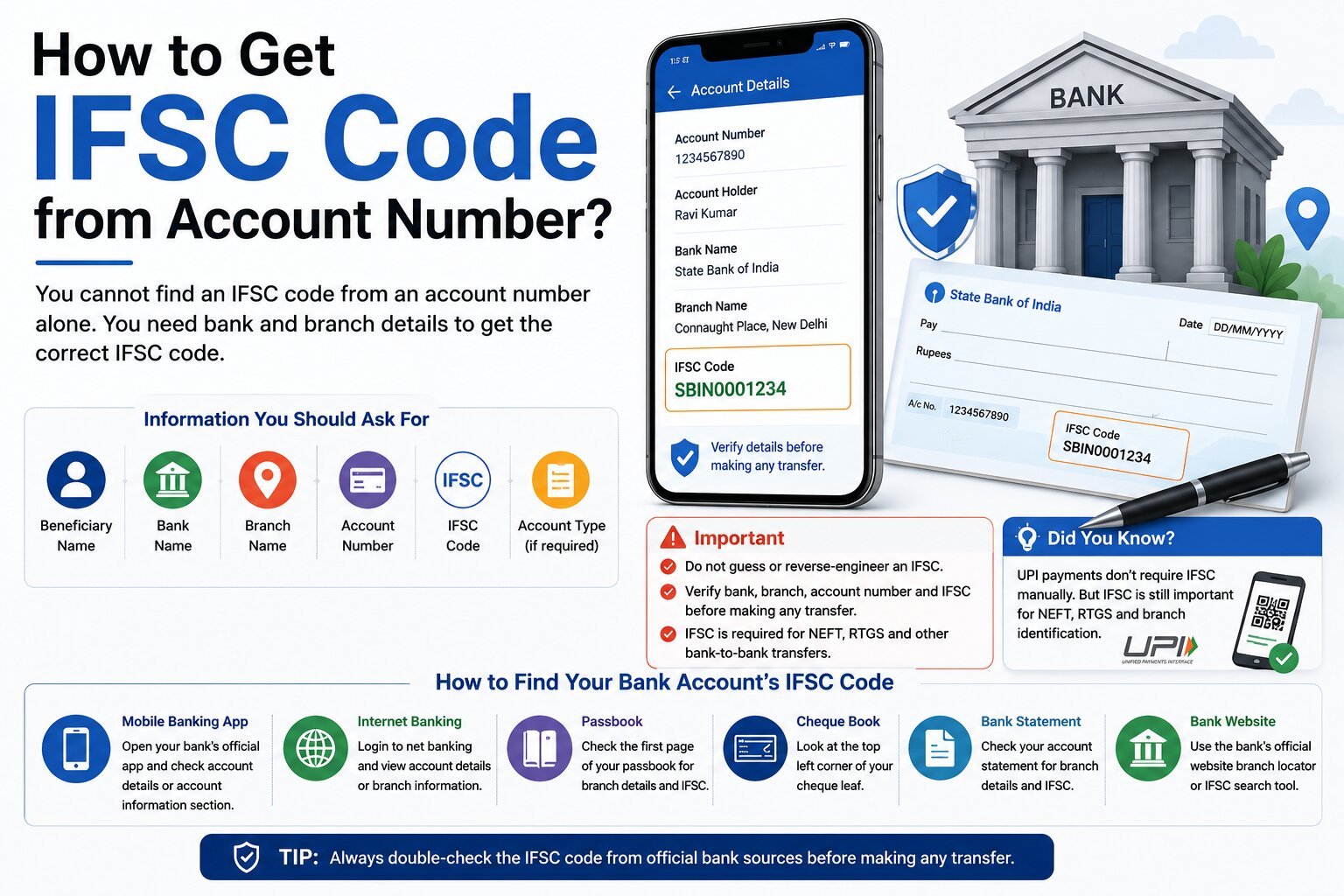
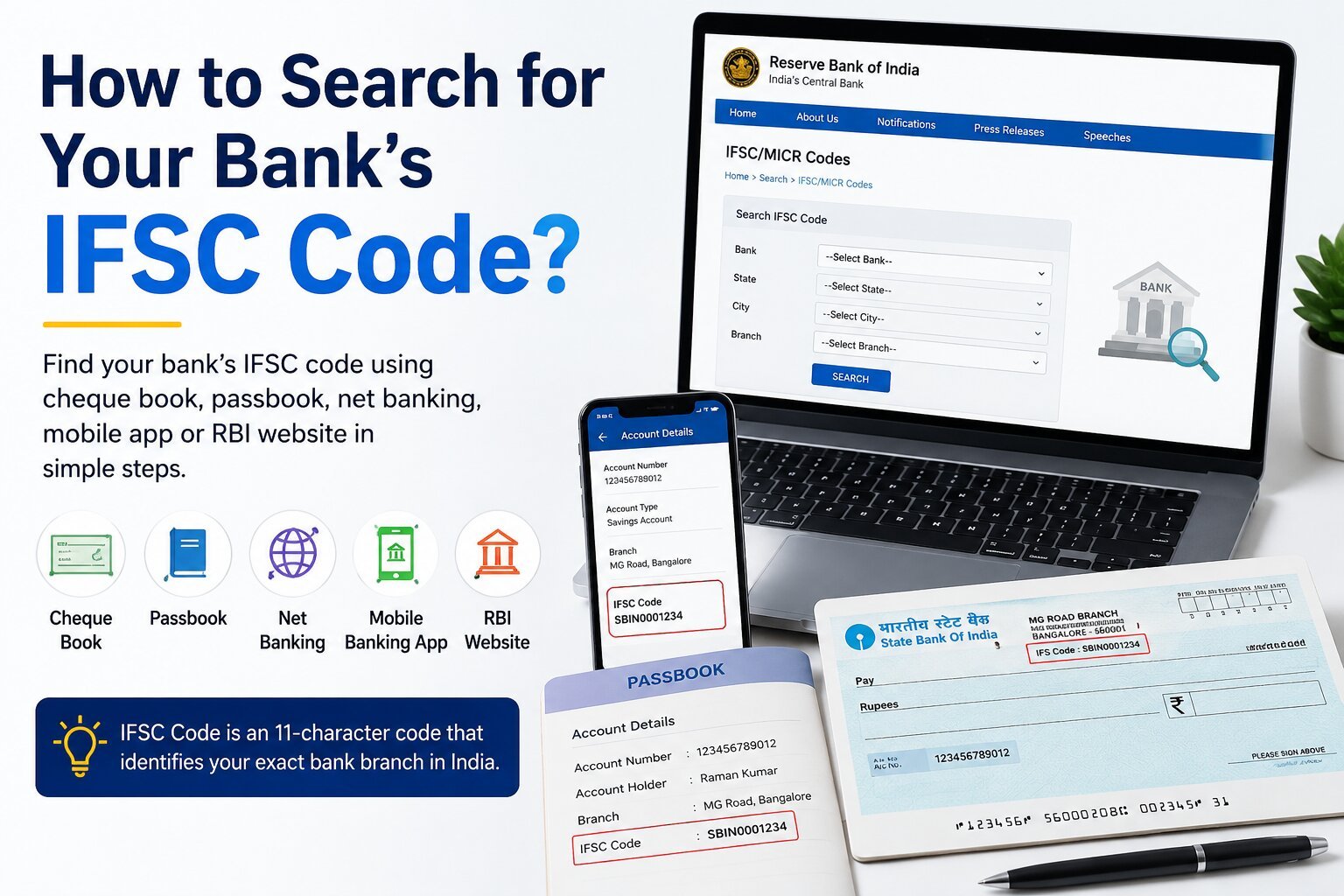
You Can Find the IFSC Code On:
-
Your bank passbook
-
Your bank cheque
-
Your bank statement
-
Internet banking portal
-
Mobile banking app
-
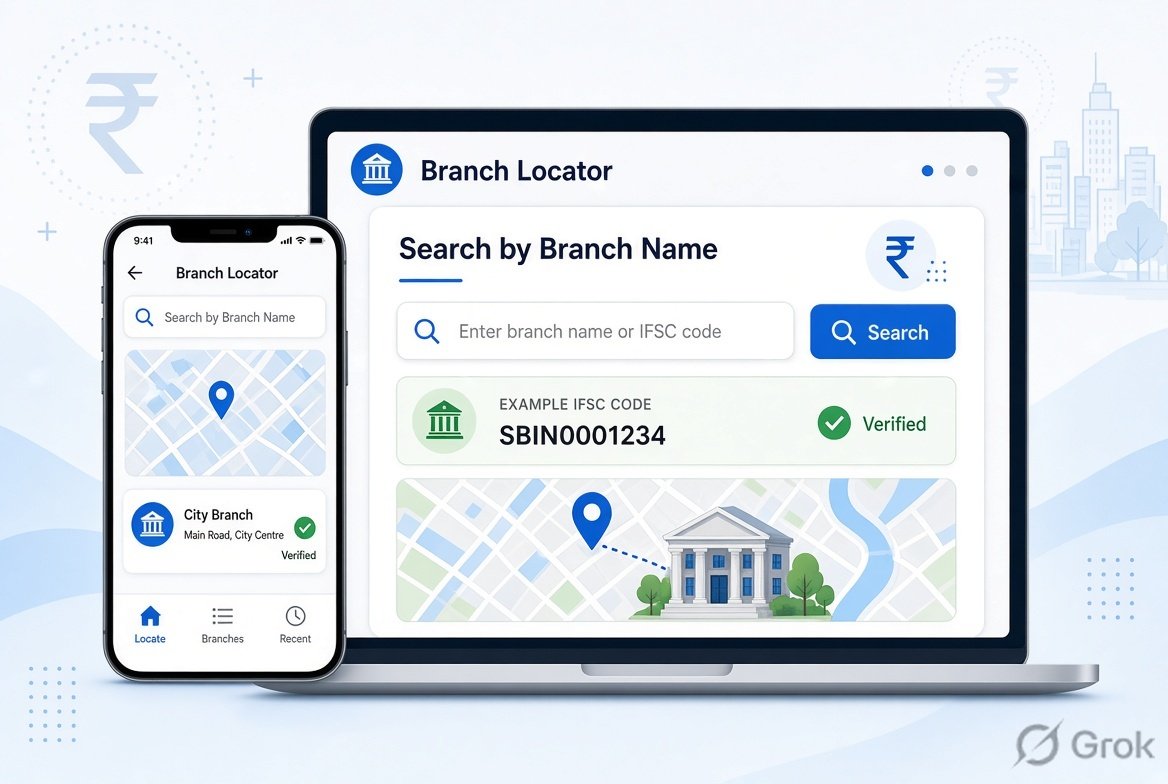
Bank's official website
-
RBI-approved IFSC lookup websites
You Can Find the MICR Code On:
-
Bottom of your cheque leaf
-
Bank passbook (available for many banks)
-
Bank's official website
-
Some bank account statements
Can Two Bank Branches Have the Same IFSC or MICR Code?
No.
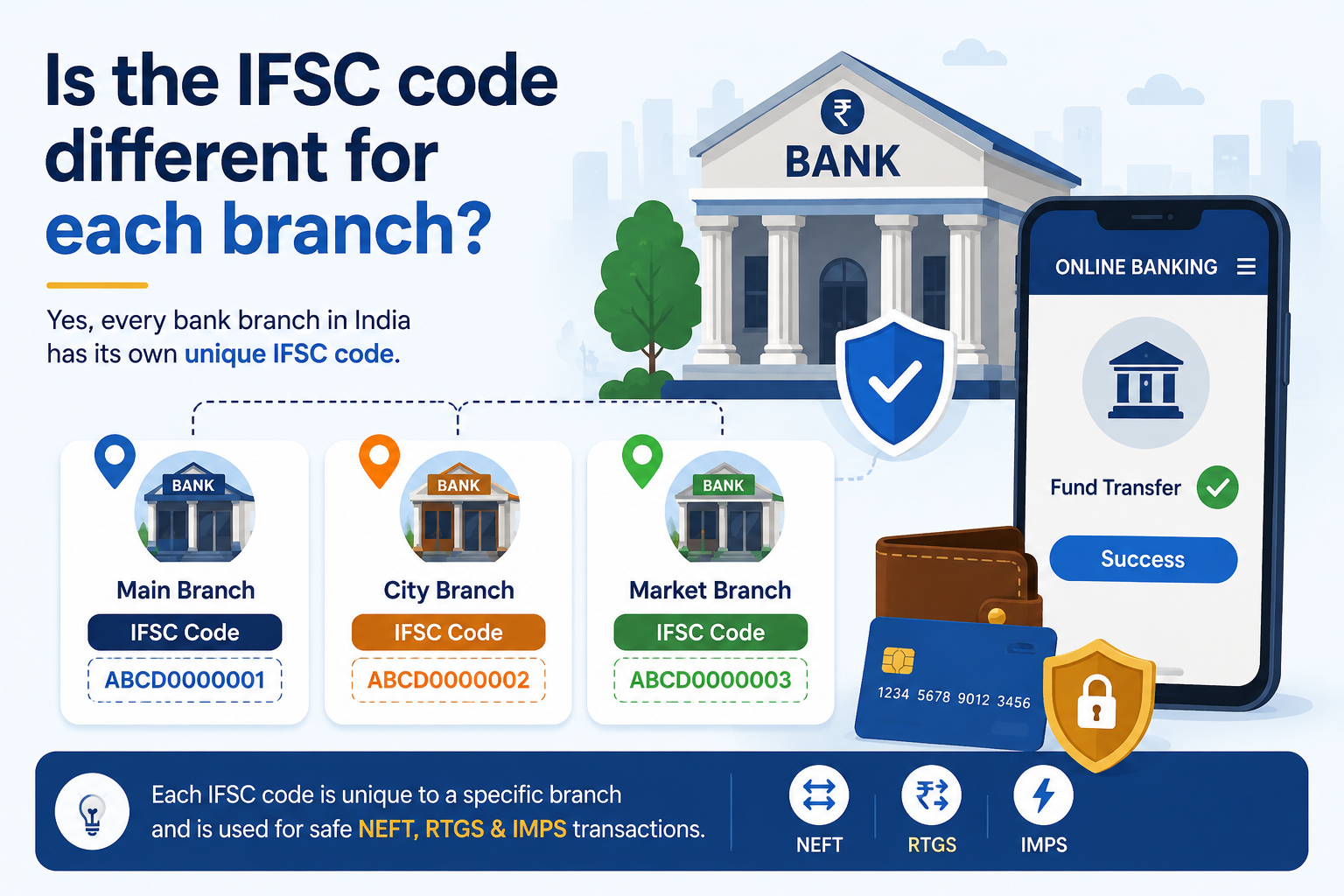
IFSC Code
-
Every bank branch has a unique IFSC code.
-
No two branches share the same IFSC code.
-
It ensures accurate routing of electronic fund transfers.
MICR Code
-
Every cheque-processing branch has a unique MICR code.
-
It helps banks identify the correct branch during cheque clearing.
-
It minimizes errors and speeds up cheque processing.
Which Code Is More Important?
Both IFSC and MICR codes are important, but they serve different purposes.
IFSC Code Is Important For
-
Online banking
-
NEFT transfers
-
RTGS payments
-
IMPS transfers
-
Digital banking transactions
MICR Code Is Important For
-
Cheque clearing
-
Demand draft processing
-
Paper-based banking services
-
Branch identification during cheque processing
Today, IFSC codes are used more frequently because digital banking and online money transfers have become the preferred way to send and receive funds. MICR codes continue to play an important role in cheque-based transactions.
IFSC Code vs MICR Code Comparison
| Feature | IFSC Code | MICR Code |
|---|---|---|
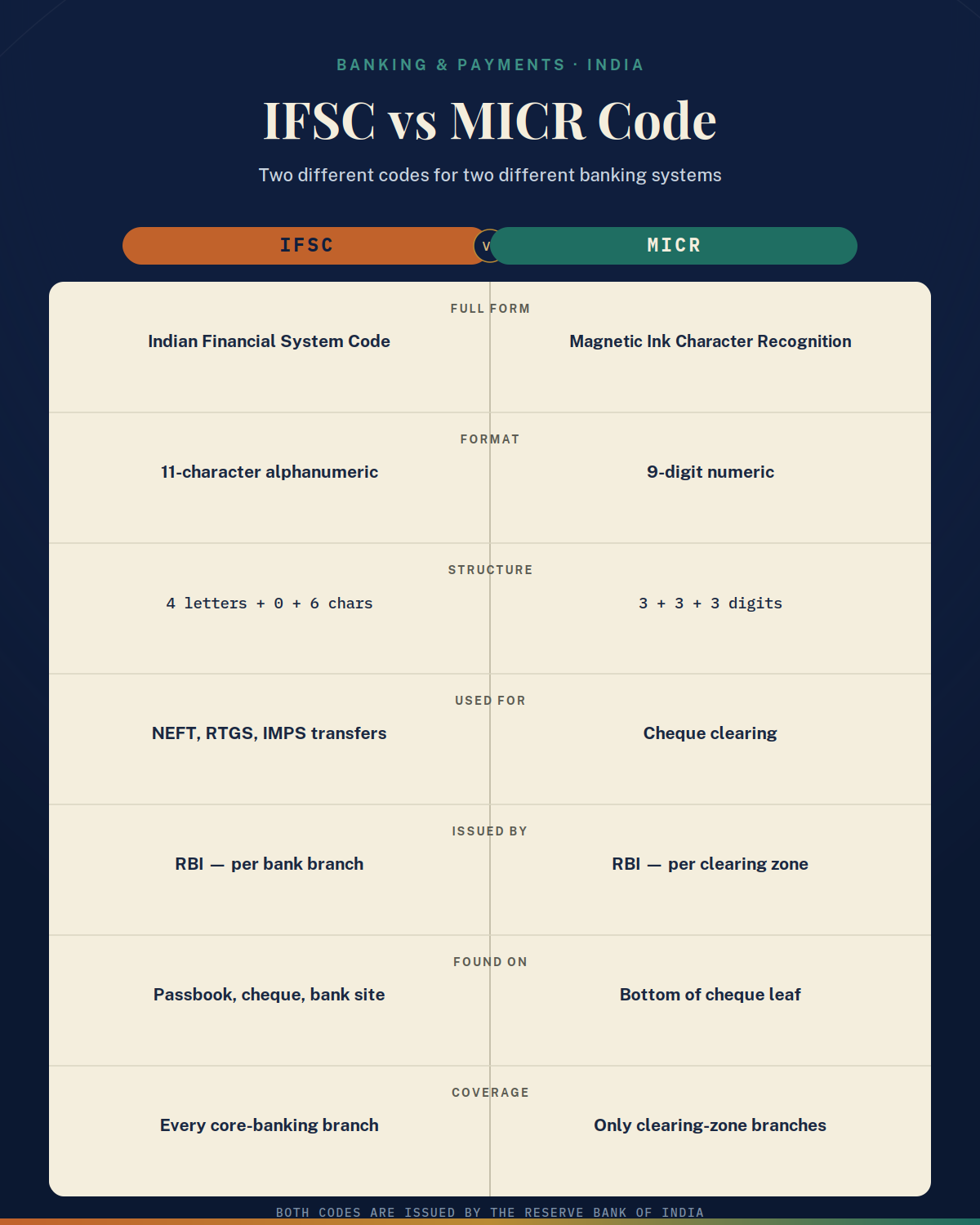
| Full Form | Indian Financial System Code | Magnetic Ink Character Recognition |
| Length | 11 characters | 9 digits |
| Format | Alphanumeric | Numeric |
| Used For | Electronic fund transfers | Cheque processing |
| Transactions | NEFT, RTGS, IMPS | Cheque clearing |
| Assigned To | Every bank branch | Every cheque-processing branch |
| Purpose | Identifies the bank branch for online transfers | Identifies the bank branch during cheque clearing |
| Appears On | Passbook, cheque, bank website, statements | Bottom of cheque leaf, passbook |
| Technology | Electronic payment system | Magnetic ink recognition technology |
| Common Usage Today | Very High | Moderate (mainly cheque transactions) |
.png)